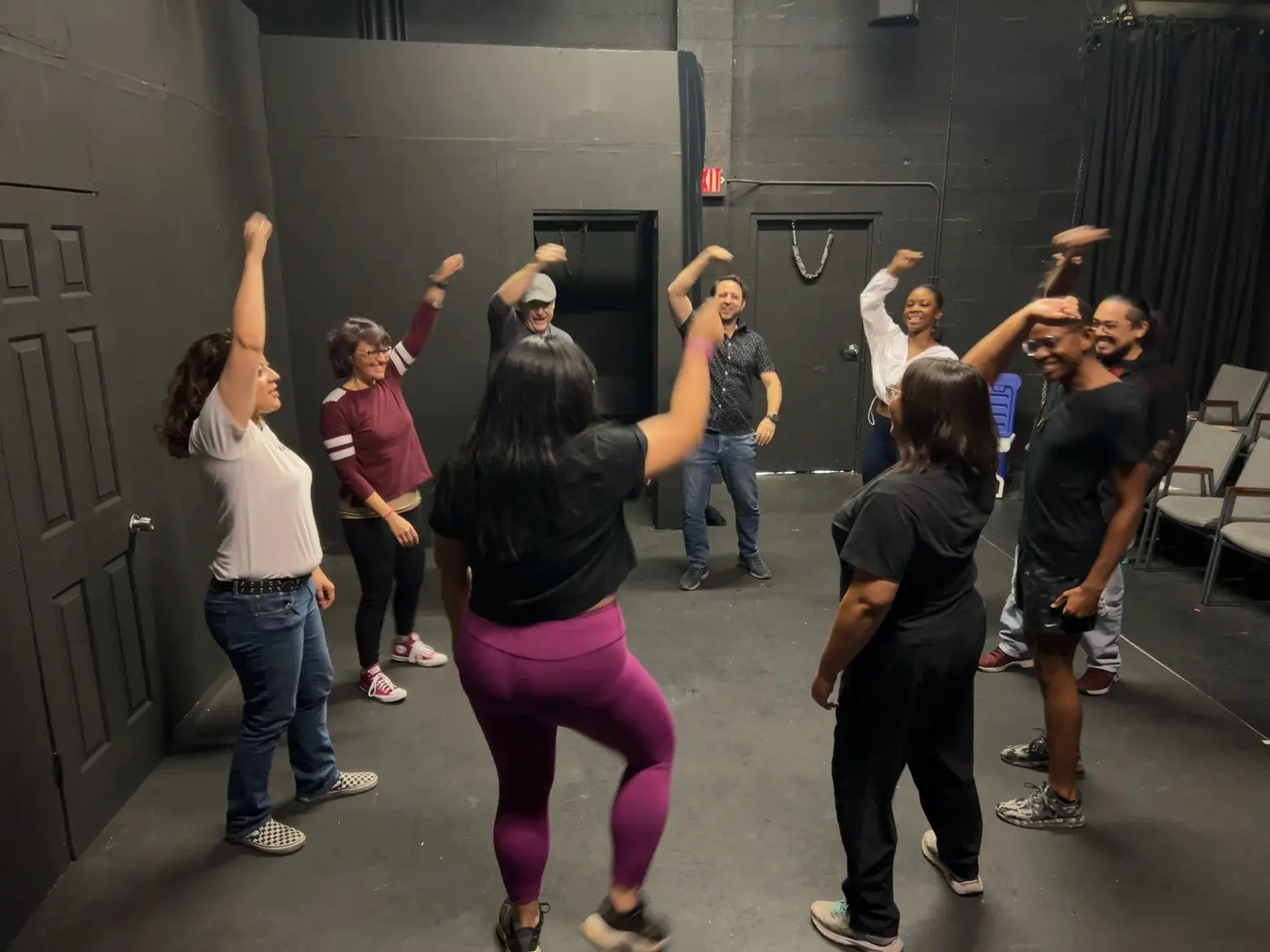
Eight adults in a loose circle raise their fists overhead mid-cheer during a class game in the black-box studio

Improv for Being a Human®

Improv Classes in Las Vegas

Six weeks, one small group, and a method built for your actual life rather than a stage. Whether you have talked yourself out of this twice or you are already reaching for the dates, you start the same way everyone does: with your name and a gesture.

5.0 on Google · 80+ reviews(opens in new tab)

  • A co-founder teaches every class
  • Six weeks with the same small group
  • No experience needed, ever
  • Las Vegas born and based

Upcoming improv classes in Las Vegas

The next sessions are below. Each one runs six weeks with the same small group, and each row names the owner teaching it. Pick the class that fits and grab a seat.

We rotate through all four classes across two teachers on two separate tracks, so this list is a snapshot, not the whole catalog. If the class you’re after isn’t in this cycle, it comes back in the next class or the one after.


Four classes, named for what you’ll say

Every class is named for a line people actually say out loud in class. One method runs under all four: Functional Improv®, improv with the performing stripped out and real life left in. No set order, no prerequisites. Pick the one that grabs you.

  • “yes, let’s”

    Commit to the idea in front of you, instead of auditioning every thought first.

    6 weeks · commitment
  • “yes, and”

    Build on what your partner just handed you. Most meetings are starving for this one.

    6 weeks · collaboration
  • “let’s play”

    Presence over polish. Enjoy the thing while it is actually happening.

    6 weeks · play
  • “fail forward”

    Miss on purpose, recover in public, and find out why we clap for it.

    6 weeks · recovery
Get Class Dates

New sessions start every few weeks, at Las Vegas Little Theatre just west of the Strip.

Planning something for a team instead? Plan a team workshop.


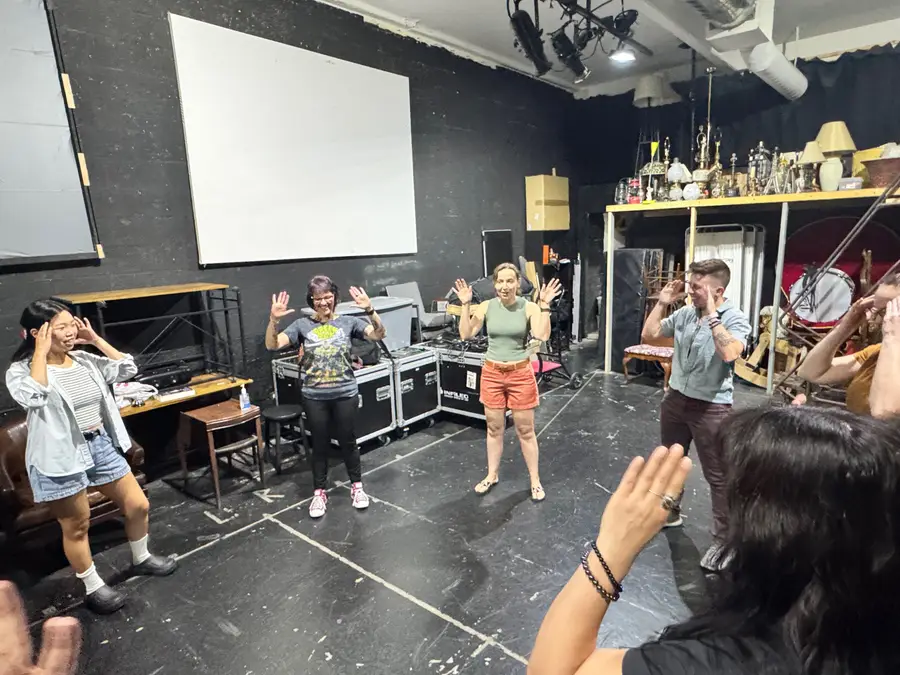
Six adults on the black-box studio floor at Las Vegas Little Theatre, hands raised near their faces in a playful group gesture mid-game
The room cheers as hard as it plays.

What actually happens across the six weeks?

  1. Week 1

    You show up. That’s the whole ask.

    The very first thing we ask is your name and a gesture - a wave, a shimmy, a fake jump shot - and the room repeats it back. That’s the entire first move. If you walk in nervous, good; it means this matters to you, and Week 1 is built around exactly that feeling. You’ll leave warm, a little surprised, and wondering why you waited.

  2. Weeks 2 - 4

    You stop rehearsing.

    Each week stretches the comfort zone one size, no more. You quit screening every thought before it leaves your mouth, start building on what your scene partner just handed you, and catch your first instinct being right more often than not.

  3. Weeks 5 - 6

    You carry it into your week. Life, improved.

    Students say it the same way: lighter, more present, less rehearsing life and more living it. Whether you realize it or not, you’re listening harder, recovering faster, and speaking up in rooms that used to shrink you. One described his final class as the first time he stopped overthinking and just did the thing.

Classes stay small, and mistakes get applause here, literally. Feeling safe enough to try, miss, laugh, and try again is the entire method. That’s the “functional” in Functional Improv®: like functional fitness, every exercise mimics a real-life situation.

See when the next one starts


Who’s in the class with you?

Look around a class and there is no single type. Ages run 21 to 65+ in the same six weeks. A new manager who got nudged into it, someone who loves learning for its own sake, a person between chapters, the quietly curious, and the already-confident hunting their next interesting thing.

Whether you signed up the day you found us or talked yourself out of it twice first, there is a seat here for you. And yes, the person certain they’re not the type is in there too - usually laughing by Week 2, wondering what they were so worried about.

Here is the part nobody expects. In a city where half of everyone is a little bit passing through, a group of adults who show up for the same six weeks and actually bond is rare. Strangers turn into your people - the kind you miss once class is over. That is the constant, whoever else signs up.

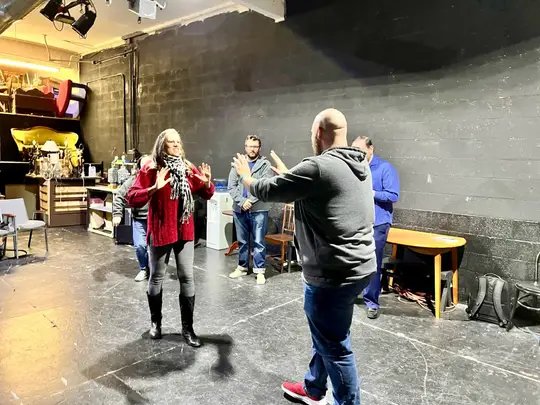
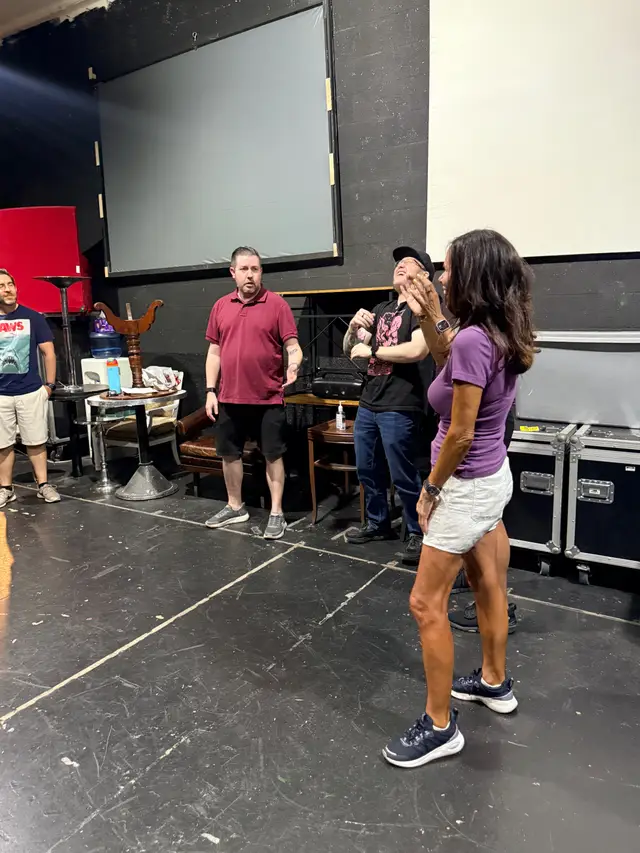
A class gathered in a loose circle across the black-box studio floor, one student mid-gesture pitching an idea while the rest of the group watches and grins
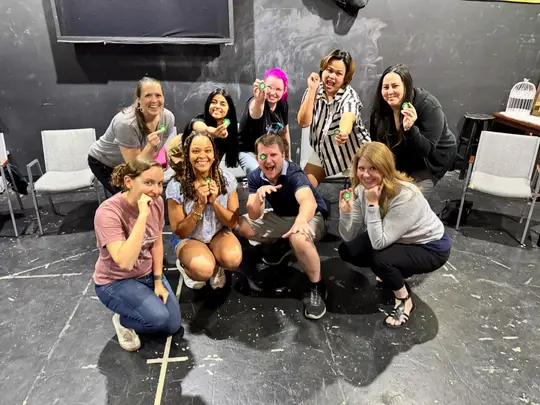
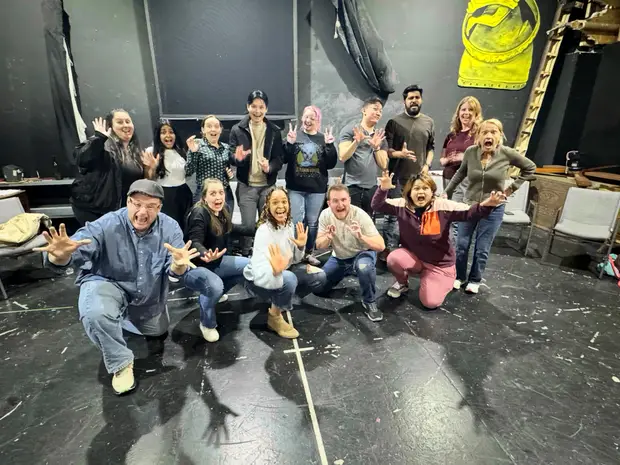
A full class packed together on the studio floor, kneeling and standing, everyone throwing monster hands at the camera and cracking up
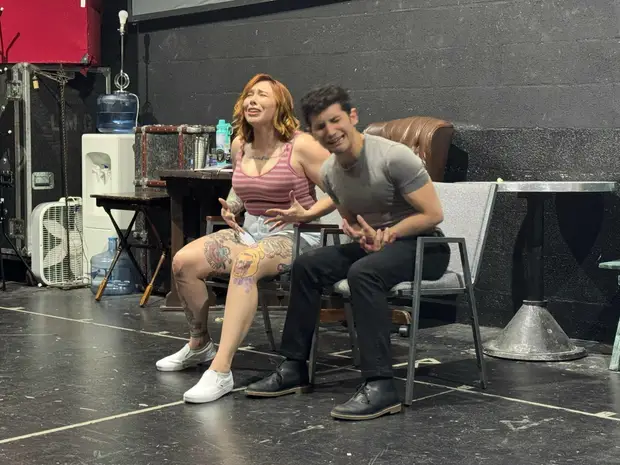
Two students seated side by side in a scene, both pulling big expressive faces mid-exercise and cracking up

70%
of our Google reviews mention fun or laughter
54%
mention a skill or a professional outcome
46%
mention friendship or connection

Is it real, or just fun?

Both, and that is the trick. The skills are hidden inside the games. You show up to play a scene, not to practice listening - and you practice listening anyway, hard, because the scene falls apart the second you stop. It is the exact muscle “yes, and” is built on, and nobody feels the workout. Eighty-odd people wrote down what it did for them, and those three numbers are what they kept saying.

Sharper listening, faster recovery, a quieter inner narrator, the nerve to speak up before you have talked yourself out of it - the same muscles carry a hard conversation, a first date, and a Monday standup. Students tell us the difference shows up in their real weeks long before the six are over.

What are the real-life benefits of improv?

Improv teaches you to tolerate uncertainty, recover from mistakes without spiraling, listen more closely, communicate with confidence, and stay present instead of overthinking every interaction. That’s why Functional Improv® has become a tool not just for performers, but for professionals, leaders, people with social anxiety, and anyone who wants to feel more at ease in everyday life. The biggest benefits of improv aren’t the laughs. They’re the habits and connections you build along the way. For Ryan, it helped him overcome perfectionism, accept failure, and act instead of think.

See the next class dates

Who’s actually teaching you?

These two, and nobody else. Whichever one of them is on the schedule stays for the whole six weeks.

Natalie Sullivan, co-founder of Vegas Improv Power

Natalie

Co-founder · the performer-coach

She spots the person about to go quiet before they know they are doing it, and hands them something easy to say.

25+ years training, performing and teaching improv: Second City, ComedySportz Chicago, iO Chicago and iO West.

Natalie Sullivan's full bio

Ryan Neufeld, co-founder of Vegas Improv Power

Ryan

Co-founder · the HR-tech founder

The introvert of the two. He retools an exercise the second it starts to feel like a spotlight, and nobody ever notices he did it.

SHRM Senior Certified Professional, 20+ years in startups and team growth, 10+ years of improv.

Ryan Neufeld's full bio

More about the two of us


Where classes happen: a studio inside Las Vegas Little Theatre

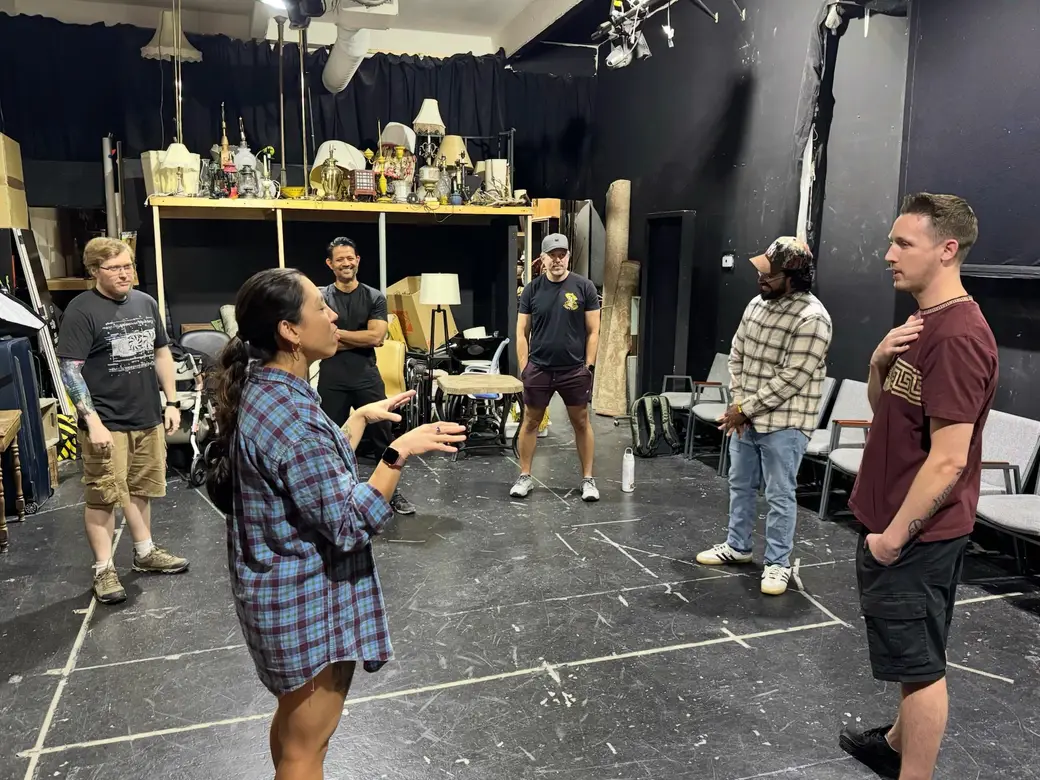
Classes run in a quirky, fun studio space at Las Vegas Little Theatre, in Spring Valley just west of the Strip. It is a real black-box theater room - painted floor, folding chairs pushed to the wall, the spike marks of a few hundred scenes underfoot. Not a hotel ballroom, not a sterile conference room. The same room, week after week, until it starts to feel like yours.

Parking is the easy part. A large, well-lit lot comes right up to the door, and it is free - no garage to circle, no meter to feed. You park, walk in, and start.

We are not a touring act passing through. Ryan has been a Las Vegan since 2003, Natalie since 2015, and we have taught here since 2018 - of this city, not just in it.

Co-founder Ryan Neufeld, mid-gesture in a maroon shirt, trading a moment with a laughing student in the black-box studio inside Las Vegas Little Theatre

What students say about our classes

You will learn a lot, laugh a lot, and make a lot of new friends.

Rodolfo G., six-week student

Recently wrapped up the 6-week ‘Let’s Play’ session and let me tell you, as an introvert, this was one of the most non-threatening classes I have ever taken.

Nancy P., six-week student

It helped me embrace perceived failures and faceplants, and just keep moving forward. I realized that much of the pain I experience is self-made and temporary.

Jason L., six-week student

As a new resident of Las Vegas, I wanted to try something new... I finished the class with life skills and friendships.

Dayana R., six-week student

If you’re reading this review, go ahead and sign up. You won’t need to read any other reviews after this one.

Joel T., six-week student

Read all our reviews on Google(opens in new tab)


Before you register

Most people arrive a little nervous, and a lot of them arrive alone. Here is everything people ask us first.

Do I need any acting or comedy experience to take an improv class?

No, you do not need any acting or comedy experience to take an improv class. Classes for adults assume you have never been on a stage, never taken a drama course, and never told a joke on purpose, and they are built to start from exactly there. What you actually practice are everyday skills - listening, staying present, and building on what someone just said - not auditions, monologues, or punchlines. Most beginners walk in with zero experience, and a good class treats that as the normal starting line.

You do not need to be funny either. Trying to be funny usually gets in the way; the laughs land on their own once you stop reaching for them, which is the whole idea behind Truth in Comedy, a book we point new students toward. In our six-week classes you practice in the same small group, and a co-founder is the one leading it.

See how Functional Improv works

Which class should I take first?

Honestly, there is no first. Our four classes are four angles on the same method, so there is no set order and no prerequisites. You can start with whichever one grabs you.

Each series runs six weeks, stands completely on its own for a beginner, and is taught by one of our two co-founders. The class names point to the muscle each one leans into, not a skill level or a sequence, so read the four descriptions and pick the one that sounds most like what you want right now.

If you want a nudge, most people start with the class whose name they like saying out loud. You genuinely cannot pick wrong.

Explore the four classes

Can I take an improv class if I am shy, anxious, or nervous in a group?

A good improv class is one of the easier rooms to walk into nervous, because no one performs alone and no one is put on the spot. You warm up through short, low-stakes games alongside the same small group each week, and a teacher guides every step without pushing you past what feels doable. Plenty of self-described overthinkers and quiet people say the nerves fade within the first few games, once it is clear that everyone there is in the same spot.

The point of the exercise is paying attention, not being clever, which quietly takes the pressure off the exact thing most nervous people are bracing for.

Read reviews from students who started nervous (opens in new tab)

How much does a class cost?

A single six-week series is $299 at the Early Bird rate, or $325 once you are inside two weeks of the start date. The Early Bird price holds as long as you register at least fourteen days out.

That one price covers all six weekly sessions with the same small group, taught by one of our two co-founders at Las Vegas Little Theatre. There are no materials fees and nothing charged per session - one series, one price.

The exact dates and current price for each upcoming class sit higher on this page, and you register straight from that listing.

See upcoming classes and prices

What if I have to miss a class?

There are no make-up classes, because the six-week series builds week to week and a single session cannot really be repeated on its own.

Missing a week or two will not set you back, though. You slot right back in with your group, you can ask your teacher about anything you missed, and a similar exercise usually comes back around later in the series.

If you already know you will miss more than a couple of weeks, it is usually worth waiting for the next series instead. A new one generally starts about eight weeks after the last, so the wait is rarely long.

Ask us about your schedule

What should I wear or bring to an improv class?

Wear comfortable everyday clothes and shoes you can move, stand, and play games in, and bring nothing more than water and an open mind. Improv classes have no dress code, no costumes, and no props to pack, and a well-run class sets no homework between sessions, so there is nothing to memorize and no notebook to fill. The only real preparation is showing up ready to move around and join in. A few students jot down a favorite game afterward, but nothing asks you to prepare in advance.

See what a class session looks like

What should I expect on my first day of an improv class?

On your first day, you walk into a room with a small group of adults and start playing simple name-and-gesture games within minutes. There is no stage, no audience, and no one performs solo or gets put on the spot. A co-founder leads the whole session, about two and a half hours, building from the easiest possible ask so that early mistakes get applause instead of pressure. By the end of the first night, most people are surprised how quickly the room stops feeling like strangers.

Most people picture standing frozen in front of a crowd. The reality is closer to a small group laughing through easy games, with a co-founder running it the whole time.

See upcoming class dates

Your next six weeks start January 13.

That one is “yes, and”, taught by Ryan Neufeld. Grab a seat and come play.

Or let the list tell you first.